
Digital privacy
Privacy is built in layers.
A practical approach to reducing the information that connects your public identity to your private life.
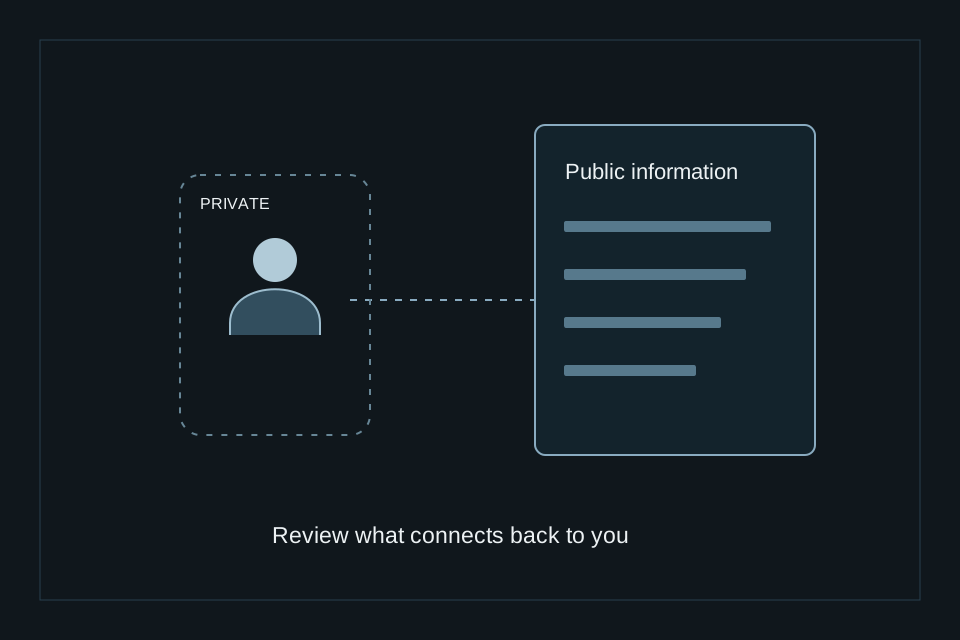
Replace invisibility with control
Complete digital invisibility is rarely a realistic objective. A more useful aim is to reduce unnecessary exposure and understand what remains public. Focus first on information that connects identity, location, family relationships and daily routines.
Map what is already visible
Review public profiles, search results, old biographies, business listings and photographs. Consider what those details reveal together, rather than assessing each page in isolation. Keep a record of where sensitive information appears and which organisation controls it.
Reduce exposure at the source
Remove unnecessary details from accounts you control. Where another publisher holds information, use its correction or removal process where available. Search-result removal does not necessarily remove the original page, and a successful request does not guarantee that copies will disappear.
Make privacy a household practice
Discuss how photographs, location tags and real-time travel updates can reveal the routines of others. Agree simple expectations with family and trusted staff. Prefer a practical shared understanding to a long policy nobody follows.
Maintain the boundary
Privacy work needs periodic review. New accounts, public announcements and changes in professional visibility can create fresh connections. A private exposure assessment helps prioritise what matters and separate an inconvenient search result from information with a meaningful personal consequence.
Explore personal cyber security services or request a confidential consultation.