
Family phishing represents the evolution of social engineering attacks, moving beyond generic email scams to highly personalized campaigns that exploit family relationships and trust. These sophisticated attacks bypass traditional security filters by appearing as legitimate communications from trusted sources.
For high profile families, the stakes are significantly higher. Attackers invest substantial resources in researching family dynamics, personal relationships, and communication patterns to create convincing fraudulent messages that can compromise entire family security ecosystems.
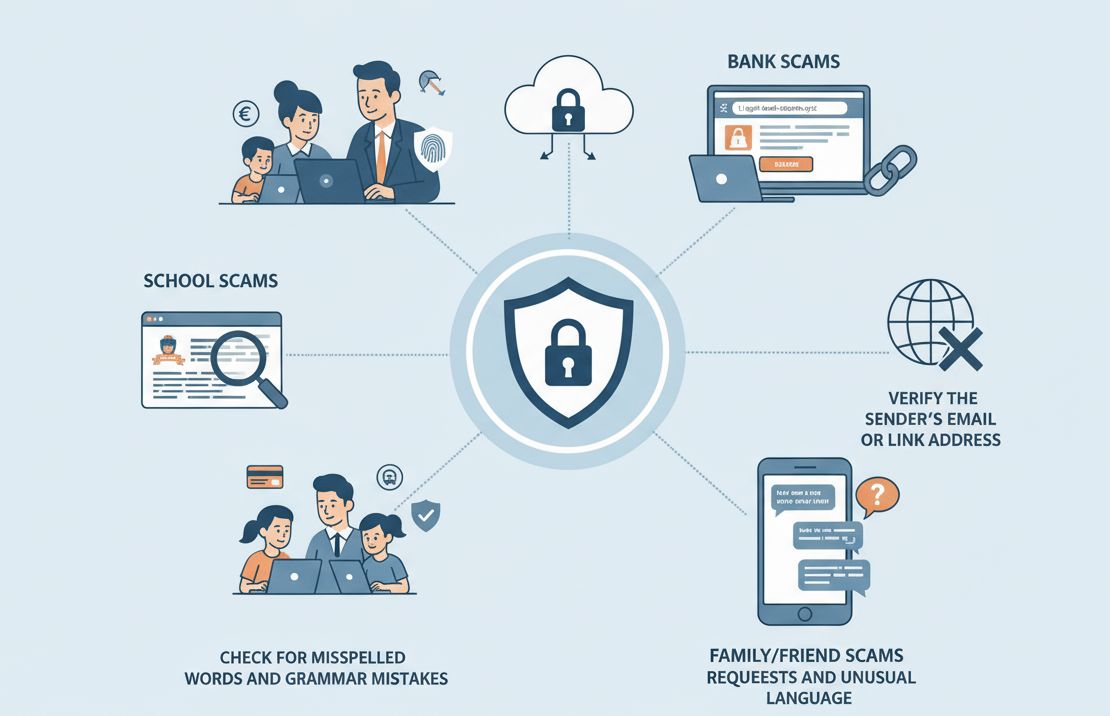
The New Generation of Family Targeted Attacks
Modern family phishing campaigns leverage detailed personal information gathered from social media, public records, and previous data breaches to create highly convincing fraudulent communications.
Educational Institution Impersonation
Attackers impersonate schools, universities, and educational programs to target parents with urgent requests for payment information, student records, or login credentials. These attacks often coincide with actual school events or deadlines.
Child Emergency Scams
Sophisticated campaigns that create false emergencies involving children, such as accidents, arrests, or medical situations. These attacks exploit parental instinct and create urgency to bypass rational verification processes.
Home Service Provider Fraud
Attackers impersonate utility companies, security system providers, or home maintenance services to gain access to home networks or extract payment information. These attacks often reference actual service providers used by the family.
Recognizing Sophisticated Phishing Attempts
Advanced family phishing attacks exhibit subtle indicators that distinguish them from legitimate communications. Training family members to recognize these signs is crucial for prevention.
Unusual Timing
Messages arriving outside normal business hours or during unusual times for the purported sender. Attackers often send messages when victims are less likely to verify through alternative channels.
Urgency and Secrecy
Requests emphasizing extreme urgency or asking recipients to keep the communication secret. These tactics prevent victims from consulting with others who might recognize the fraud.
Slight Domain Variations
Email addresses or websites with subtle misspellings or domain variations that closely resemble legitimate addresses. Examples include replacing letters with similar looking numbers or characters.
Unusual Attachment Types
Unexpected file attachments, especially executable files, archives, or documents with macros. Legitimate organizations rarely send unsolicited attachments.
Real World Attack Examples
Understanding actual attack scenarios helps families recognize similar attempts targeting them.
The Grandparent Scam Evolution
Traditional grandparent scams involved phone calls from individuals pretending to be grandchildren in emergency situations. The modern evolution uses compromised social media accounts or spoofed messaging apps to send convincing multimedia messages, including AI generated voice clips that sound like actual family members.
Subject: URGENT: Student Medical Emergency Authorization Required
Date: Saturday, 2:37 AM
Dear Parent,
Your child [Child Name] has experienced a medical emergency during a school field trip. We require immediate authorization for emergency treatment and payment information for hospital admission.
CLICK HERE TO ACCESS THE AUTHORIZATION FORM
This matter requires immediate attention. Do not delay as it may impact your child's medical care.
Sincerely,
School Medical Office
Family Phishing Defense Training
Our security team provides customized phishing awareness training for families, including simulated attack exercises and ongoing threat monitoring.
Schedule Family Security TrainingMulti Layer Family Protection Strategy
Effective defense against family phishing requires a comprehensive approach that combines technical controls, procedural safeguards, and ongoing education.
Communication Verification Protocols
Establish family wide procedures for verifying unusual requests, especially those involving financial transactions or sensitive information. Implement code words or verification questions for high risk communications.
Technical Safeguards Implementation
Deploy advanced email filtering, multi factor authentication, and secure communication channels. Use dedicated contact methods for sensitive communications with schools, healthcare providers, and financial institutions.
Family Security Education
Conduct regular security awareness sessions tailored to different age groups and technical proficiency levels. Teach family members to recognize phishing indicators and follow established verification procedures.
Age Appropriate Security Training
Different age groups require tailored approaches to phishing awareness and security education.
Children and Teenagers
- Teach them to never share personal or family information online
- Establish rules for verifying unusual messages from friends
- Explain the risks of clicking unknown links or downloading files
- Create a safe environment for reporting suspicious messages
Adult Family Members
- Implement formal verification procedures for financial requests
- Establish secure communication channels for sensitive topics
- Conduct regular security refresher training
- Share information about current phishing trends and techniques
Elderly Family Members
- Provide simplified verification procedures
- Establish designated contacts for verifying suspicious communications
- Implement technical safeguards to block known malicious senders
- Create clear escalation procedures for potential phishing attempts
Advanced Threat Detection Measures
For high profile families, basic protection measures may be insufficient against determined attackers. These advanced strategies provide additional security layers.
Digital Footprint Management
Reduce attack surface by systematically removing family information from data broker sites, social media platforms, and public records. Monitor for new appearances of personal information and implement alert systems for potential compromise indicators.
Dark Web Monitoring
Implement continuous monitoring for family personal information on dark web markets and hacker forums. Early detection of compromised data allows proactive protection measures before attacks occur.
Threat Intelligence Feeds
Subscribe to specialized threat intelligence services that monitor for phishing campaigns targeting high net worth families and executives. These services provide early warning of emerging tactics and specific threats.
Incident Response Planning
Despite robust prevention measures, families should prepare for potential phishing incidents with clear response procedures.
- Immediate action protocols: Steps to take when a phishing attempt is identified
- Communication procedures: How to alert other family members and relevant organizations
- Technical containment: Procedures for securing accounts and devices
- Legal and regulatory considerations: When and how to involve law enforcement
- Recovery procedures: Steps to restore security and prevent recurrence
When Professional Protection Becomes Essential
While many phishing protection measures can be implemented independently, high profile families should consider professional security services when:
- Family members have experienced repeated targeting by sophisticated attackers
- The family's public profile makes them high value targets
- Multiple generations with varying technical proficiency require protection
- Previous security incidents have resulted in actual compromise
- The family requires 24/7 monitoring and immediate response capabilities
Family phishing represents one of the most significant and evolving threats in the cybersecurity landscape. By understanding these sophisticated attacks and implementing comprehensive protection strategies, families can significantly reduce their risk while maintaining the open communication essential for family dynamics.
The key to effective family phishing defense lies in combining technical safeguards with ongoing education and clear communication protocols. When every family member understands their role in security and feels empowered to question suspicious communications, the entire family becomes more resilient against these sophisticated social engineering attacks.